Une collection
conçue pour l'aventure
Since the beginning of modern warfare, governments have turned to private manufacturers to produce their vehicles, equipment and weapons.
The watches that governments distributed to their troops were no exception.
Instead of producing their own watches, governments usually provided a specification that was dutifully followed by its subcontractors.
This was the case with the GG-W-113, one of the earliest watch models ordered by the US government. The order detailed the design and efficiency requirements for the wristwatch issued to military pilots. Published on 6 June 1967, the specification emphasised the US military's need for a legible, accurate and durable watch for use in active combat.
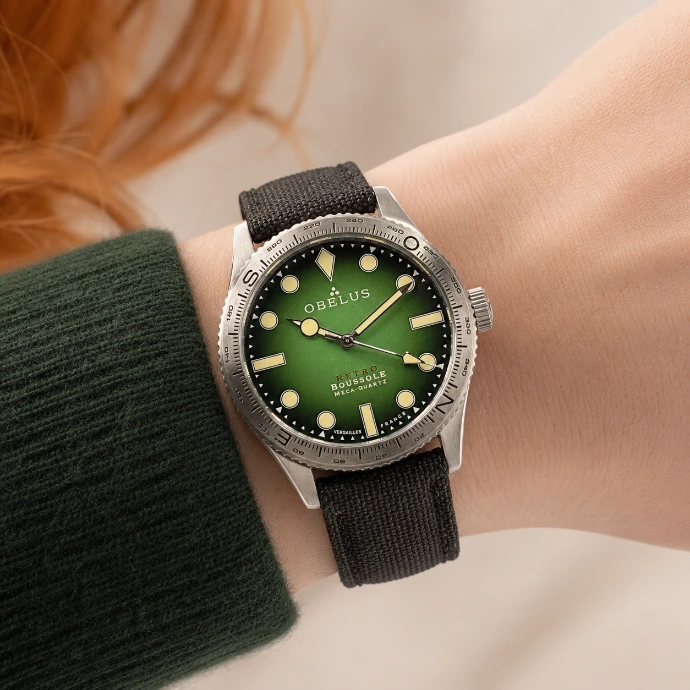
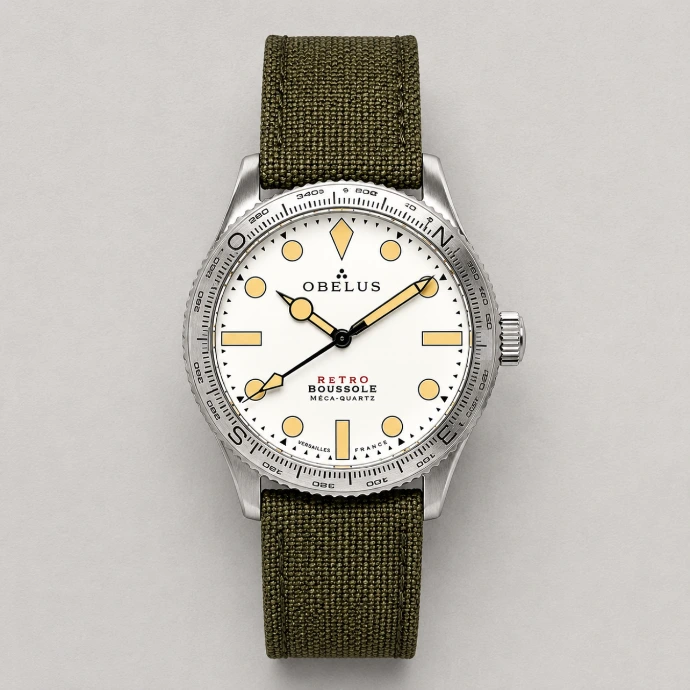
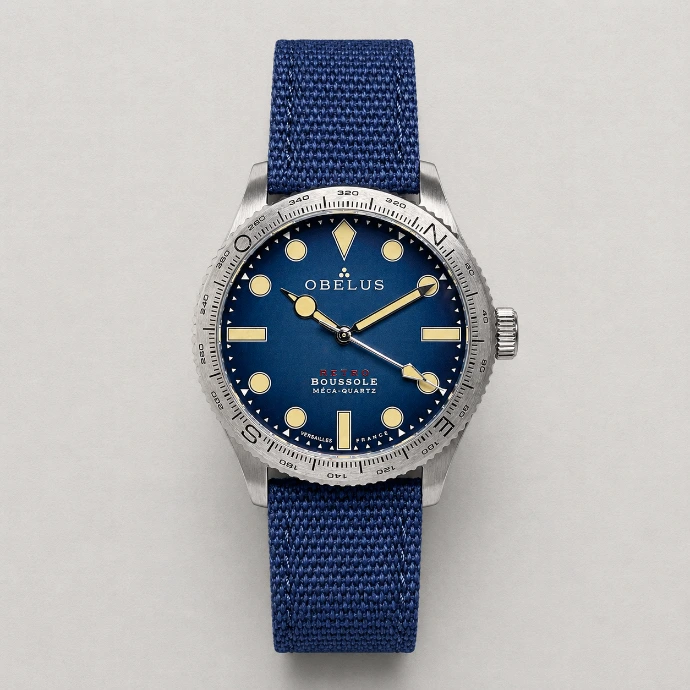
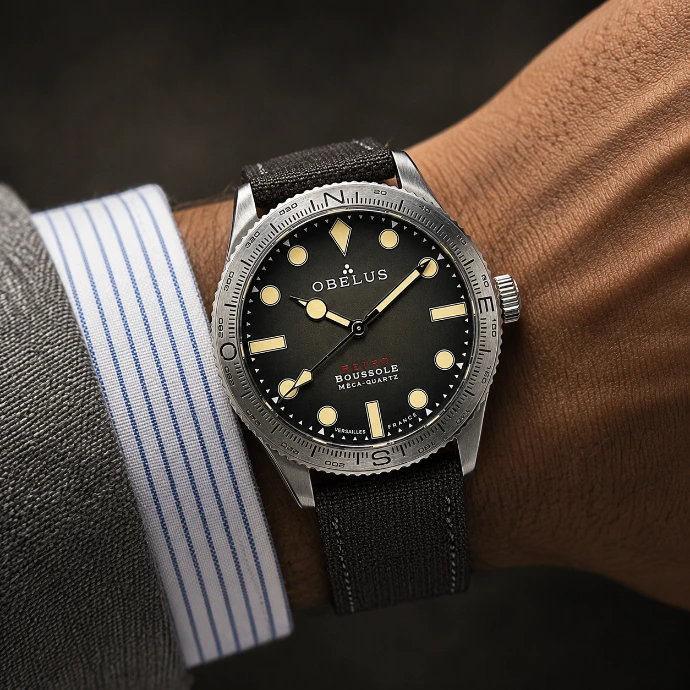
Aujourd'hui, la maison Obelus se permet de "réinterpréter" ce modèle avec ses 2 versions en 3 aiguilles, mouvement à remontage automatique, Taylor, et hybride méca-quartz avec la collection Boussole.
Taylor et Boussole
60/70's Style
Inspired by the military watches of the 60s and 70s, this watch will appeal to all vintage enthusiasts thanks to its atypical style, automatic movement and original finishes.
Boîte : Acier inoxydable 316L sablé anti-reflets ou brossé
Height: 46 mm
Width: 39 mm
Thickness: 12 mm
Lunette : Fixe ou tournante
Case-back: Solid, decorated 316L steel
Glass: Sapphire crystal, anti-reflective coating
Etanchéité : 20 atm (200 mètres) et 10 atm (100mètres) / couronne vissée / fond visé
Cadran : Noir mate ou fumé, gris, bleu, blanc et vert
Needles: Sticks with vintage Super-Luminova® treatment
Mouvement : Automatique et méca-quartz de chez la manufacture Seiko
Réserve de marche : 42 heures ou 24 mois autonomie de pile
Functions: Hours, minutes, central seconds
Strap: Black NATO and vintage khaki fabric
Lug spacing: 20 mm
Boucle : Ardillon en acier inoxydable
All our watches are guaranteed for two years from the date of purchase.
Water resistant
A watch with a case designed to protect it from dust and water. At 30 m or 50 m, the model can withstand a pressure of 3 or 5 bars. In practice, it is resistant to accidental contact with water (rain, housework, splashes), but not to total immersion, nor to intensive diving, and even less to scuba diving. It is therefore better to choose a watch tested at a greater depth (100 m or 200 m) and fitted with a crown.
Automatic
Invented in the 16th century by Abraham Louis Perrelet. Later perfected by Abraham Louis Breguet, the automatic watch is a mechanical watch that uses the principle of terrestrial attraction to wind itself by the mere movements of its owner's arm. This "watch that winds itself". Or "perpetual watch" as it was once called, recycles the energy of wrist movements.