Skip to Content
obelus-watches.com
  • Home
  • Collections
  • Shop
  • Collaborations
  • Who are we?
  • Blog
  • Sign in
  • 0
  • 0
  • English (UK) Français
  • ​Secure payments ​ 2-year warranty ​ Free shipping
obelus-watches.com
  • 0
  • 0
    • Home
    • Collections
    • Shop
    • Collaborations
    • Who are we?
    • Blog
  • ​Secure payments ​ 2-year warranty ​ Free shipping
  • English (UK) Français
  • Sign in
 

unnecessary, but absolutely
INDISENSABLE!


Discover our history

First partner store   
Versailles 


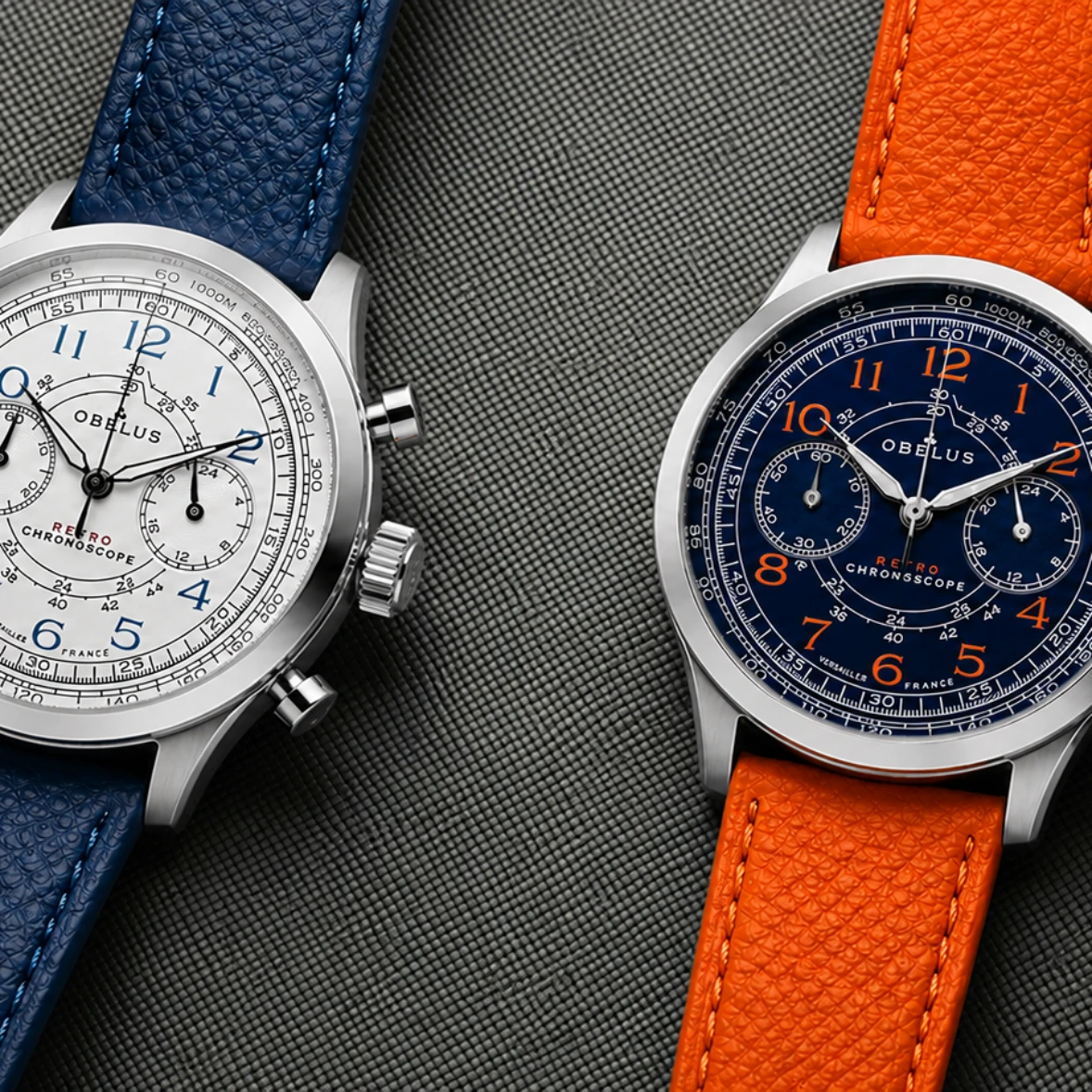
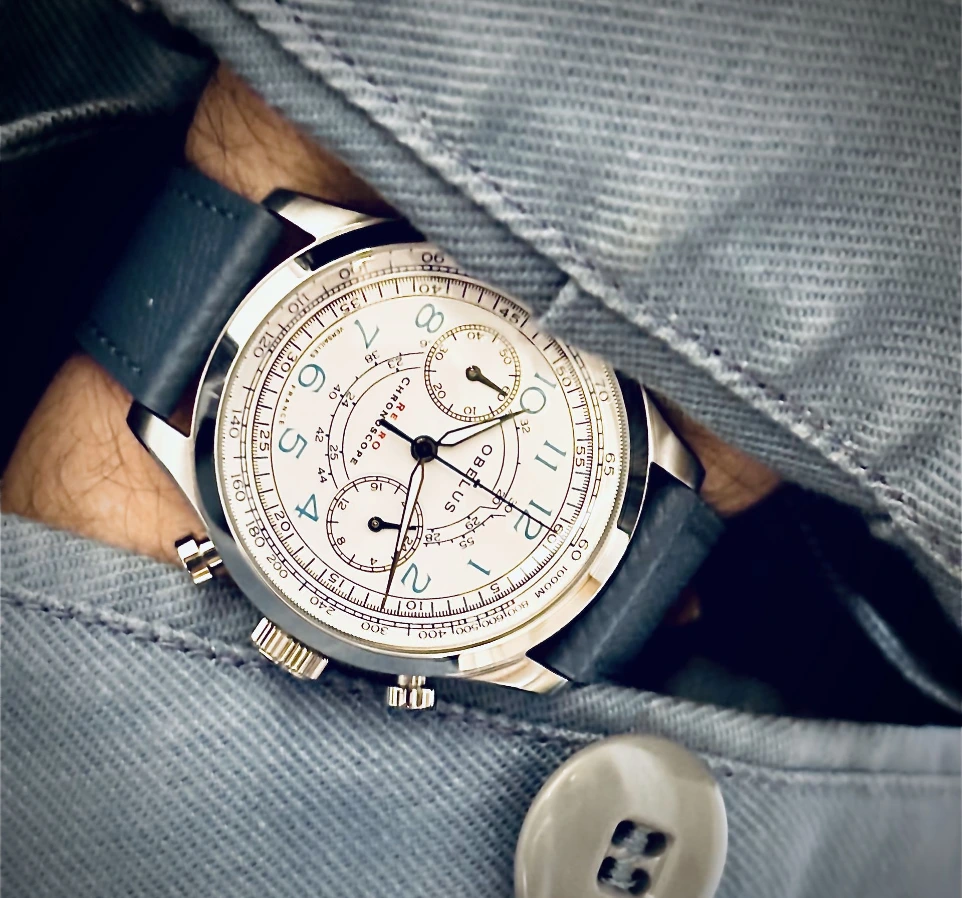
OBELUS pays tribute to the golden age of the chronograph.

The Retro Chronoscope collection offers a modern interpretation with a retro aesthetic.

It offers larger cases: 39 and 42 mm, compared to 36/38 mm in the 1950s/1960s, to suit modern tastes, while retaining the simple, flat silhouette of the classic vintage watch, faithful to the original spirit.More details


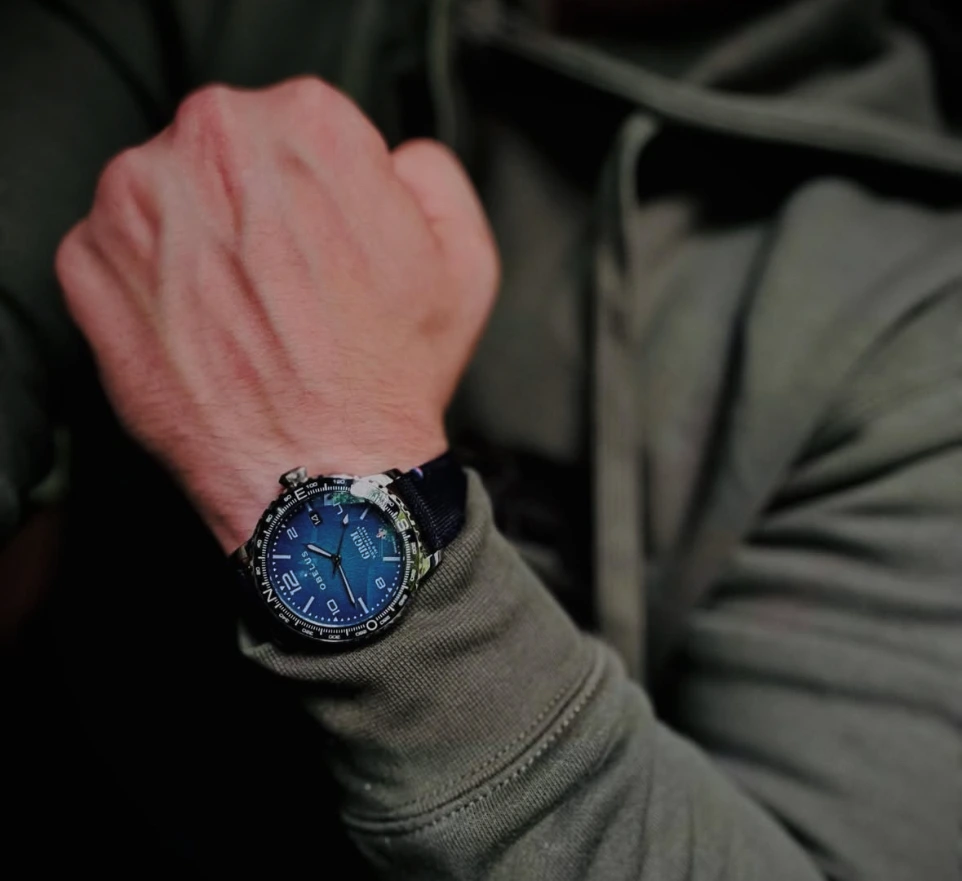
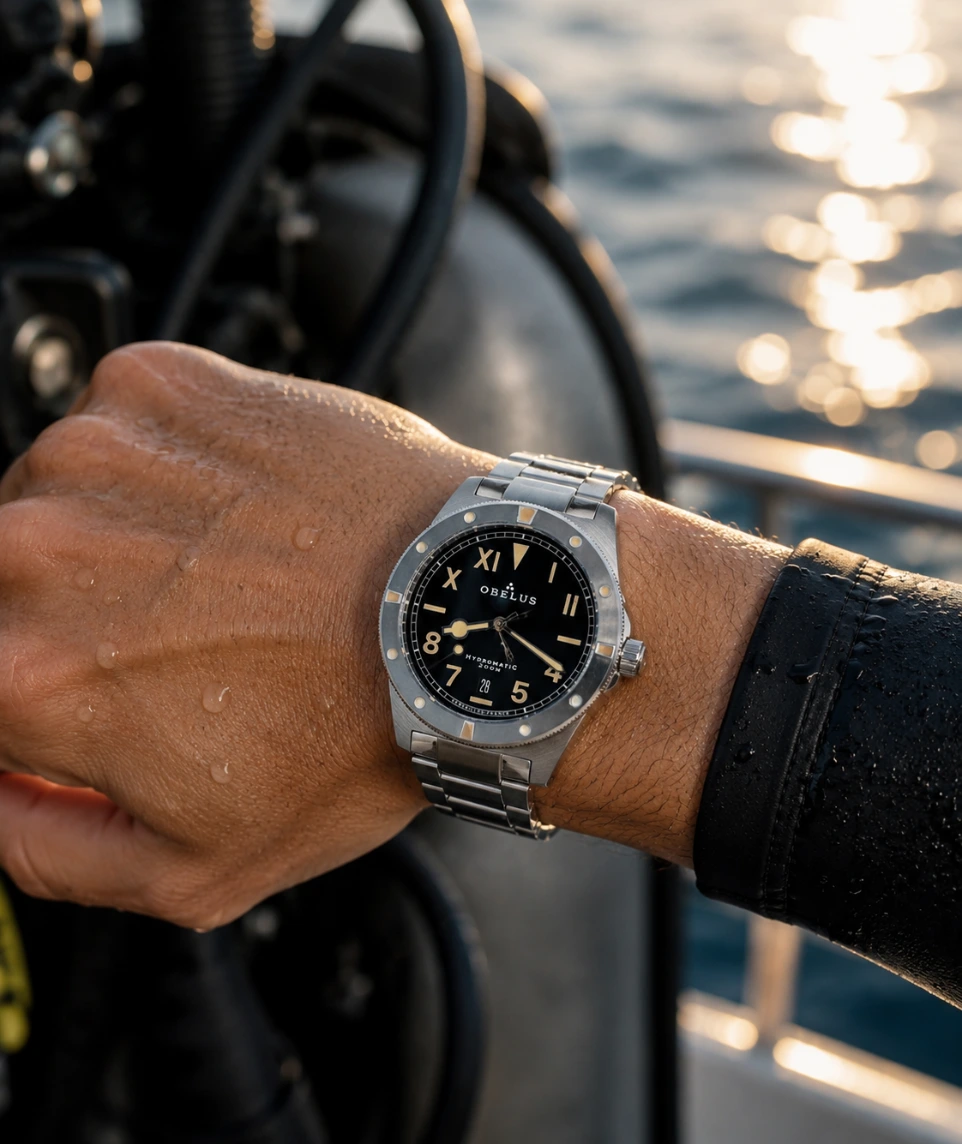
Our ambition is to bring simplicity to the classic dive watch, and we're delighted to launch our new dive watch.

We have developed a high-end watch using the finest materials to create a durable automatic watch that you can wear anywhere, whether at sea, in the office, while playing sports, and much more.
More details​​​​​​​​​​

​


Today, OBELUS has taken the liberty of "reinterpreting" a watchmaking classic from the 60s and 70s: the "military-type watch".

We are offering you two different versions: the OP.001 3-hand model, with its mechanical self-winding movement, and its companion model, the OC.001 Chronograph with its mecha-quartz movement.

Le tout en super édition limitée. 

Plus de détail


OBELUS rend hommage à l'âge d'or de l'histoire du chronographe.   ​ 

La collection Retro Chronoscope offre une interprétation moderne avec une esthétique rétro. 

Elle propose des boîtiers plus grands : 39 et 42 mm, contre 36/38 mm dans les années 50/60, pour répondre aux goûts modernes ; tout en conservant une silhouette sobre et plate de la montre vintage classique, fidèle à l'esprit d'origine.


More informat​ion

​

Aujourd'hui, la maison OBELUS se permet de "réinterpréter" un classique de l'horlogerie des années 60/70 : "la montre  type militaire".  

Nous vous proposons d'acquérir deux versions différentes, le modèle OP.001 3 aiguilles, mouvement mécanique à remontage automatique et son coéquipier le modèle OC.001 Chronographe doté d'un mouvement méca-quartz . 

Le tout en super édition limitée. 


More information​​​​​​

Notre ambition est d'apporter de la simplicité à la montre de plongée classique, et nous sommes heureux de lancer notre nouvelle montre de plongée. 

Nous avons développé une montre haut de gamme avec les meilleurs matériaux, afin d'obtenir une montre automatique durable que vous pouvez porter où que vous soyez en mer, au bureau, en faisant du sport et bien plus encore.


More information​​​​​​​​​​

A long time ago, it was a small box with a dial and a mechanical movement inside. It was worn to tell the time.

A timepiece, therefore, to watch it go by. Nowadays, all you have to do is turn on a computer, a mobile phone, or even look at the door of a microwave oven, to find out what time it is... The competition is enormous. The time is everywhere.

And the fine inventors of all these highly technological and modern devices had predicted the death of the watch.


Il y a fort longtemps, c'était une petite boîte avec un cadran et un mouvement mécanique à l'intérieur. On la portait sur soi pour connaître l'heure. 

Un garde-temps donc, pour précisément le regarder passer. Aujourd'hui il suffit d'allumer un ordinateur, un téléphone portable, voire de  regarder la porte d'un four à micro-ondes, pour savoir l'heure qu'il est... La concurrence est énorme. L'heure est partout. 

Et les fins inventeurs de tous ces appareils hautement technologiques et modernes avaient prédit la mort de la montre.

In Middle Kingdom Egypt, the first hour of the day was called “the brilliant hour.” And the first hour of the night was known as “the defeat of Ra's enemies.” Over time, the Egyptians were the first to name the hours in order to better understand them.

The Nile people had already adopted the division of the day into twenty-four hours, inherited from the Sumerians. The Egyptian priests then invented the first elementary clocks to materialise the passage of time: "shadow clocks", made of a ruler and two squares related to the height of the stars in the sky, which, through skilful calculations, allowed them to establish the passage of the hours. But too complex, they were soon replaced by the gnomon, a simple stick planted in the ground whose shadow, rotating according to the earth's rotation, gave the time of day on a graduated support, the sundial was born. It reigned for four millennia and was still used to set the time on railway clocks at the beginning of the 20th century...

The only "hitch" was that this first universal time-measuring instrument could not work at night.

In Middle Kingdom Egypt, the first hour of the day was called “the brilliant hour.” And the first hour of the night was known as “the defeat of Ra's enemies.” Over time, the Egyptians were the first to name the hours in order to better understand them.

The people of the Nile had already adopted the division of the day into twenty-four hours, inherited from the Sumerians. Egyptian priests then invented the first basic clocks to measure the passage of time: “shadow clocks,” made of a ruler and two squares set at the height of the stars in the sky, which, through clever calculations, allowed them to determine the passing of the hours. But these were too complex and were soon replaced by the gnomon, a simple stick stuck in the ground whose shadow, turning with the Earth's rotation, showed the time of day on a graduated support. The sundial was born. It reigned for four millennia and was still used to set the clocks of the railway networks at the beginning of the 20th century...

The only “snag” was that this first universal timekeeping device could not function at night.

"​  Watchmaking is perhaps the art where ignorance should be least tolerated.  "

Diderot and d'Alembert's Encyclopaedia


Since the 1990s, watches have moved from an essentially functional status to that of an object of desire.

The multiplication of brands and collections, and the creation of increasingly complicated movements have led to a watchmaking overkill that confuses the general public and makes it increasingly difficult for amateurs to choose.

Since the 1990s, watches have evolved from being primarily functional items to objects of desire.

The proliferation of brands and collections, along with the creation of increasingly complicated movements, has led to a watchmaking arms race that confuses the general public and makes it increasingly difficult for enthusiasts to choose.

Everything is designed. 

Few things are well designed,

 our watches are !


Discover our watches

Follow us on Instagram
@obelus_watches

Discover our watches


Discover our watches

Your Dynamic Snippet will be displayed here... This message is displayed because you did not provided both a filter and a template to use.

Be notified of upcoming 
new releases !

By registering, you agree to our terms and conditions and consent to receiving emails from us. You can unsubscribe at any time.

Merci pour votre inscription !

S'abonner


Our references


Usefull links​

  • FAQ
  • Terms and Conditions
  • Use of the site
  • Legal
  • Privacy Policy
About us

We are a team of watch enthusiasts
watch enthusiasts and discerning collectors, all 
in the French city of kings, Versailles. 

Join us

  • Contact us
  • contact@obelus-watches.com

Suivez-nous
Copyright © 2026 Obelus. All Rights Reserved
Powered by Odoo - The #1 Open Source eCommerce

Le respect de votre vie privée est notre priorité.

Autoriser l'utilisation des cookies de ce site web sur ce navigateur ?

Nous utilisons des cookies pour améliorer l'expérience sur ce site web. Vous pouvez en savoir plus sur nos cookies et sur la manière dont nous les utilisons dans notre Politique en matière de cookies.

Je suis d'accord
N'autoriser que les cookies essentiels